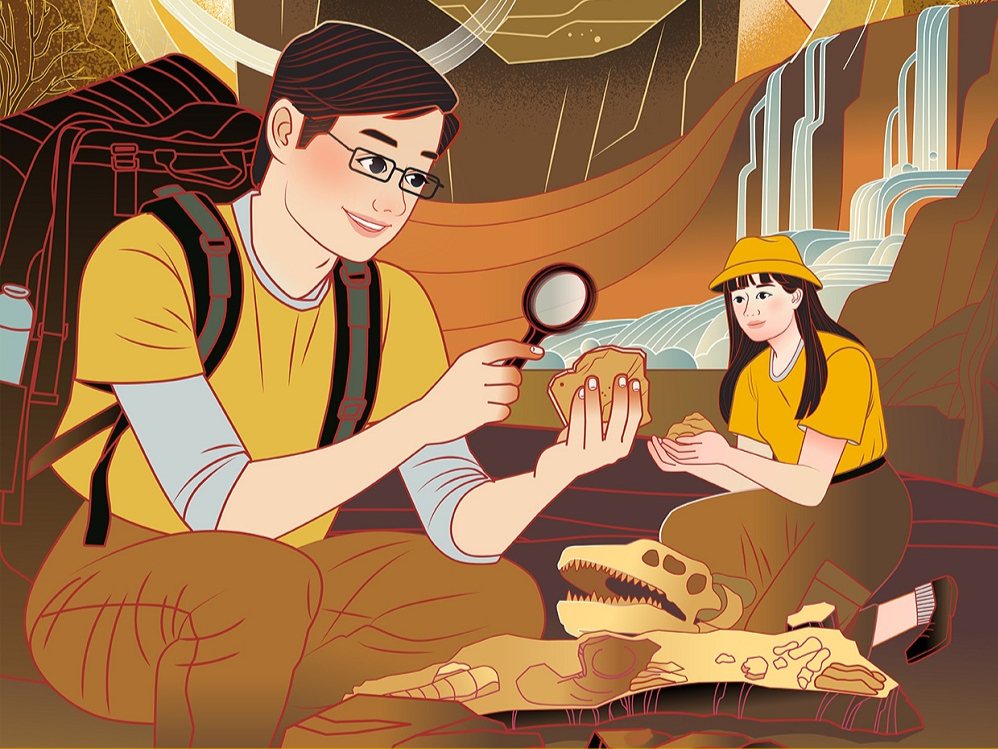
Yuanmou Man
Introduction
Yuanmou Man refers to the hominid fossils discovered in Yuanmou county, Yunnan province, China. These fossils represent one of the earliest known examples of Homo erectus in Asia, dating back approximately 1.7 million years. Yuanmou Man played a critical role in understanding the timeline of human evolution in the region, and its discovery significantly shifted the understanding of early human presence in China.
Discovery and Significance
The fossils of Yuanmou Man were discovered by geologist Qian Fang in 1965 during geological surveys in Yuanmou county. The initial finds consisted primarily of two upper incisor teeth, which were later identified as belonging to Homo erectus, a direct ancestor of modern humans. These fossils, along with associated stone tools, suggested an early human presence in the area, pushing back the timeline of hominid habitation in East Asia.
Yuanmou Man's discovery was pivotal because it provided evidence for the early migration of Homo erectus out of Africa and into Asia. Prior to this, the timeline and migration routes of early humans in Asia were not well understood. The Yuanmou fossils, together with stone tools found at the site, indicated that early hominids were capable of adapting to diverse environments.
Geological and Archaeological Context
Yuanmou county is part of Yunnan province, a region known for its rich geological and archaeological history. The area has been a focal point for studies on human evolution, hosting other significant finds such as the Lufeng Ape and the Mengzi Man. The geological context of Yuanmou Man provides insight into the environmental conditions faced by early humans.
The fossils were embedded in layers of sediment that have been dated using various methods, including paleomagnetic stratigraphy, to approximately 1.7 million years ago. This dating places Yuanmou Man among the earliest human ancestors in Asia and aligns it with other Homo erectus discoveries globally. The stone tools found with Yuanmou Man include scrapers and choppers, indicating technological capabilities and adaptation strategies.
Impact on Human Evolution Studies
Yuanmou Man has been instrumental in shaping the understanding of human evolution, particularly regarding the spread of Homo erectus across Asia. As one of the earliest known examples of Homo erectus outside Africa, Yuanmou Man provides evidence of early human adaptability and migration.
The fossils support theories that Homo erectus was the first hominid species to leave Africa, spreading into Asia and eventually Europe. This migration is believed to have occurred due to climatic changes and the search for new resources. Yuanmou Man's existence in Yunnan suggests that early humans could adapt to various environments, ranging from open savannas to more forested and mountainous regions.
Museums and Exhibits
The Geological Museum of China in Beijing houses the Yuanmou Man fossils. This museum is renowned for its extensive collection of geological specimens and fossils, including those of Yuanmou Man, which have been designated as "National Treasures." The museum's exhibits provide valuable information on the evolutionary history of humans and the geological context of these important finds.
The Yuanmou fossils are part of a broader exhibition that showcases the development of ancient species and their environments. Visitors can learn about the geological periods that shaped the earth and the evolutionary processes that led to the emergence of modern humans.
Cultural and Educational Impact
Yuanmou Man has not only scientific but also cultural and educational significance. The discovery has been featured in various educational materials and documentaries, helping to raise awareness of human evolutionary history. Films like "Peking Man, the Last Secrets of Humankind" explore the significance of such discoveries, taking viewers on a journey through prehistoric times and engaging them with the scientific processes behind these revelations.
Yuanmou Man's legacy continues to inspire curiosity about human origins and evolution. It serves as a valuable educational tool for understanding the complexities of human migration and adaptation. Schools and educational institutions often include Yuanmou Man in curricula focused on anthropology and paleontology, highlighting its importance in the broader narrative of human history.








